
Mount Everest

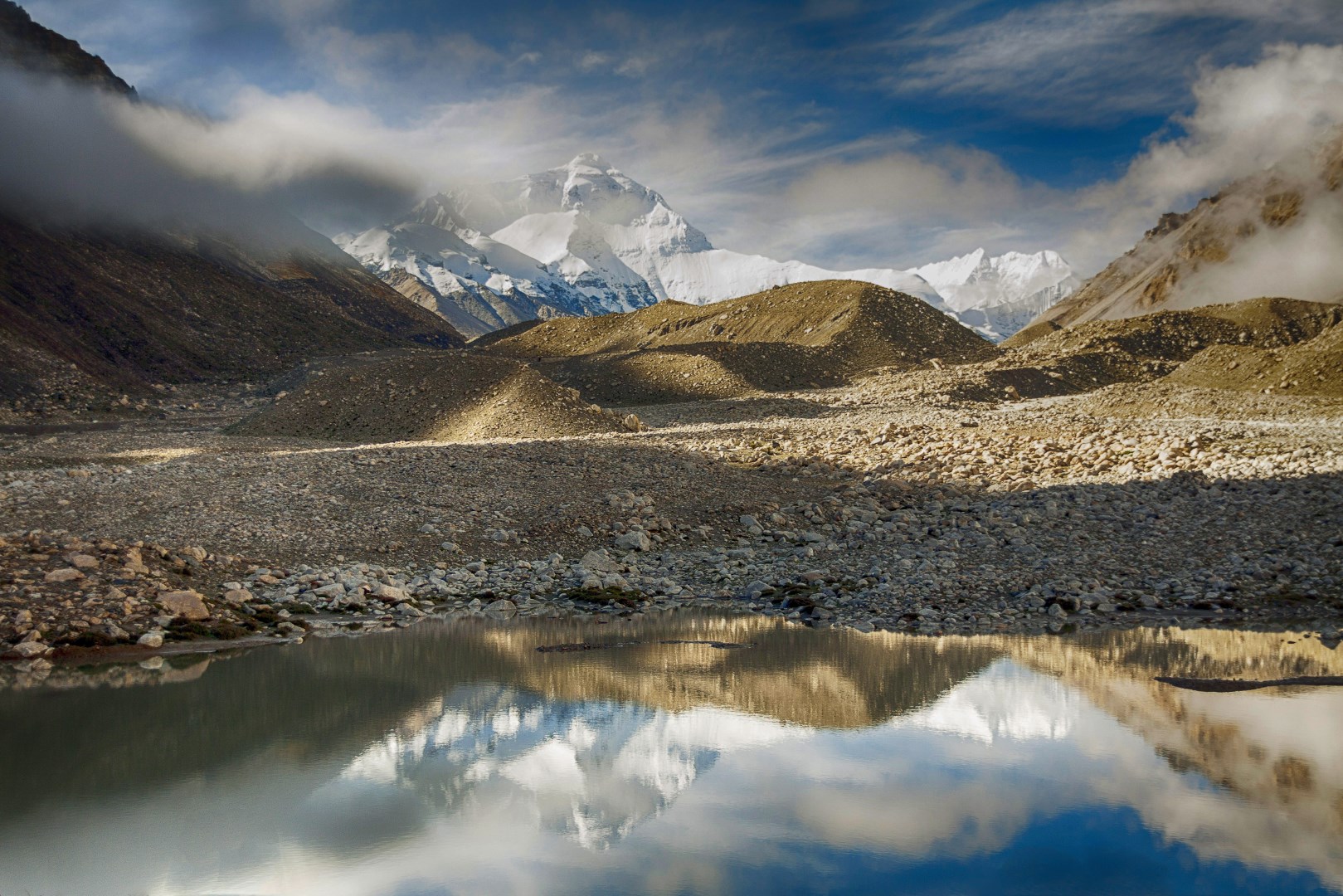
Rising along the border of Nepal and Tibet, Mount Everest stands as the highest point on Earth, reaching over 29,000 feet into the sky. Known locally as Sagarmatha, meaning “Peak of Heaven,” and Chomolungma, meaning “Goddess Mother of the World,” the mountain carries deep spiritual meaning for the communities that live in its shadow. Its summit sits in air so thin that oxygen levels are only a fraction of what travelers experience at sea level, creating an environment that feels almost otherworldly.
The story of Everest is shaped by both human ambition and local tradition. For generations, Sherpa communities have lived in the surrounding Khumbu region, guiding visitors and preserving customs tied to the mountain’s sacred status. The first confirmed ascent by Edmund Hillary and Tenzing Norgay marked a turning point, opening the region to global exploration while still honoring the mountain’s cultural importance. Today, visitors can follow parts of the same routes on treks to Everest Base Camp, passing prayer flags, monasteries, and stone carvings that reflect a living spiritual landscape.
The natural surroundings are just as striking as the summit itself. Everest is part of a vast Himalayan system formed by the collision of tectonic plates, and it continues to rise slightly each year. Massive glaciers such as the Khumbu Glacier carve through the valleys, while nearby peaks like Lhotse and Nuptse create a dramatic skyline. Lower slopes reveal forests of rhododendron and pine, along with wildlife such as snow leopards and red pandas, offering a surprising contrast to the icy heights above.