

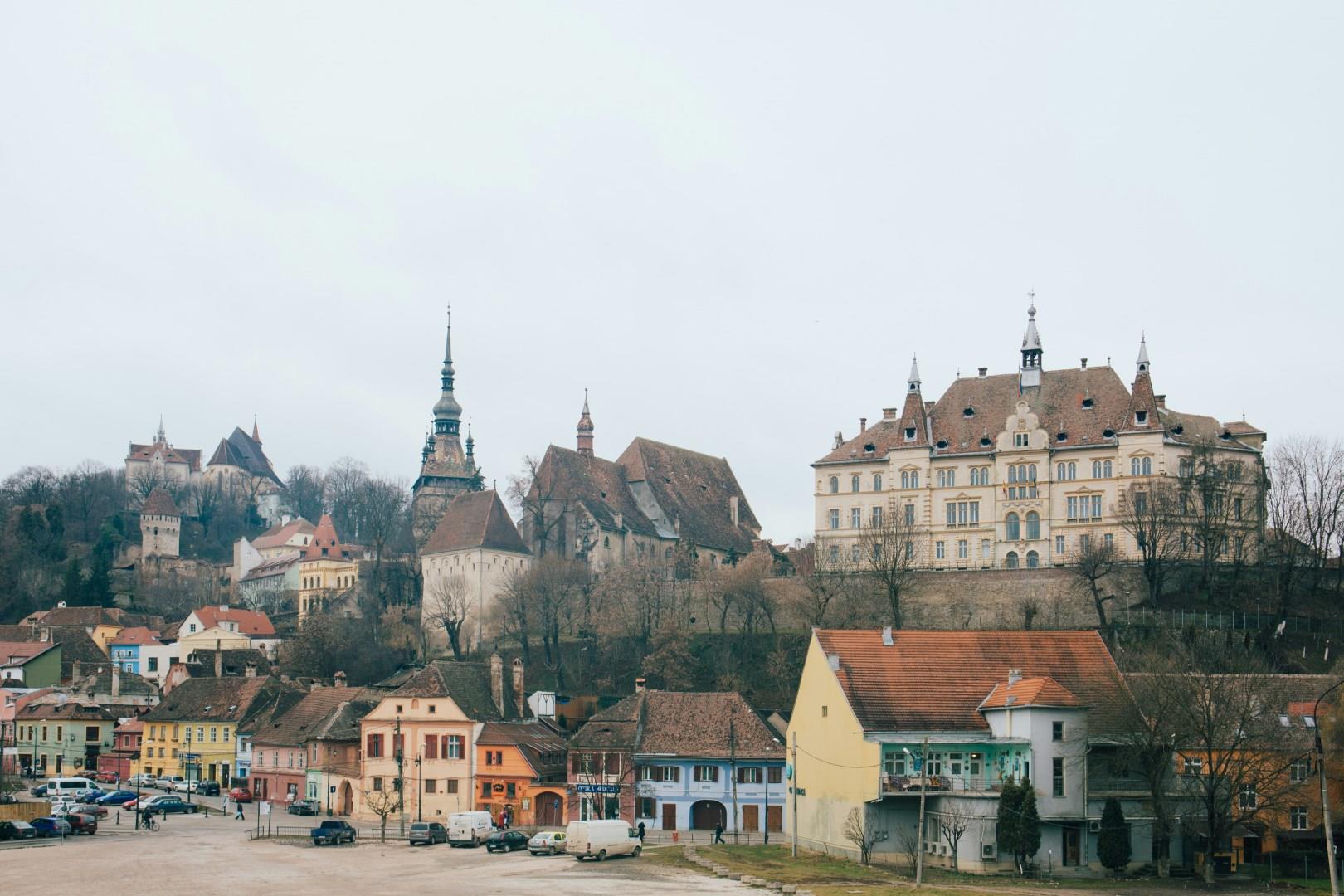
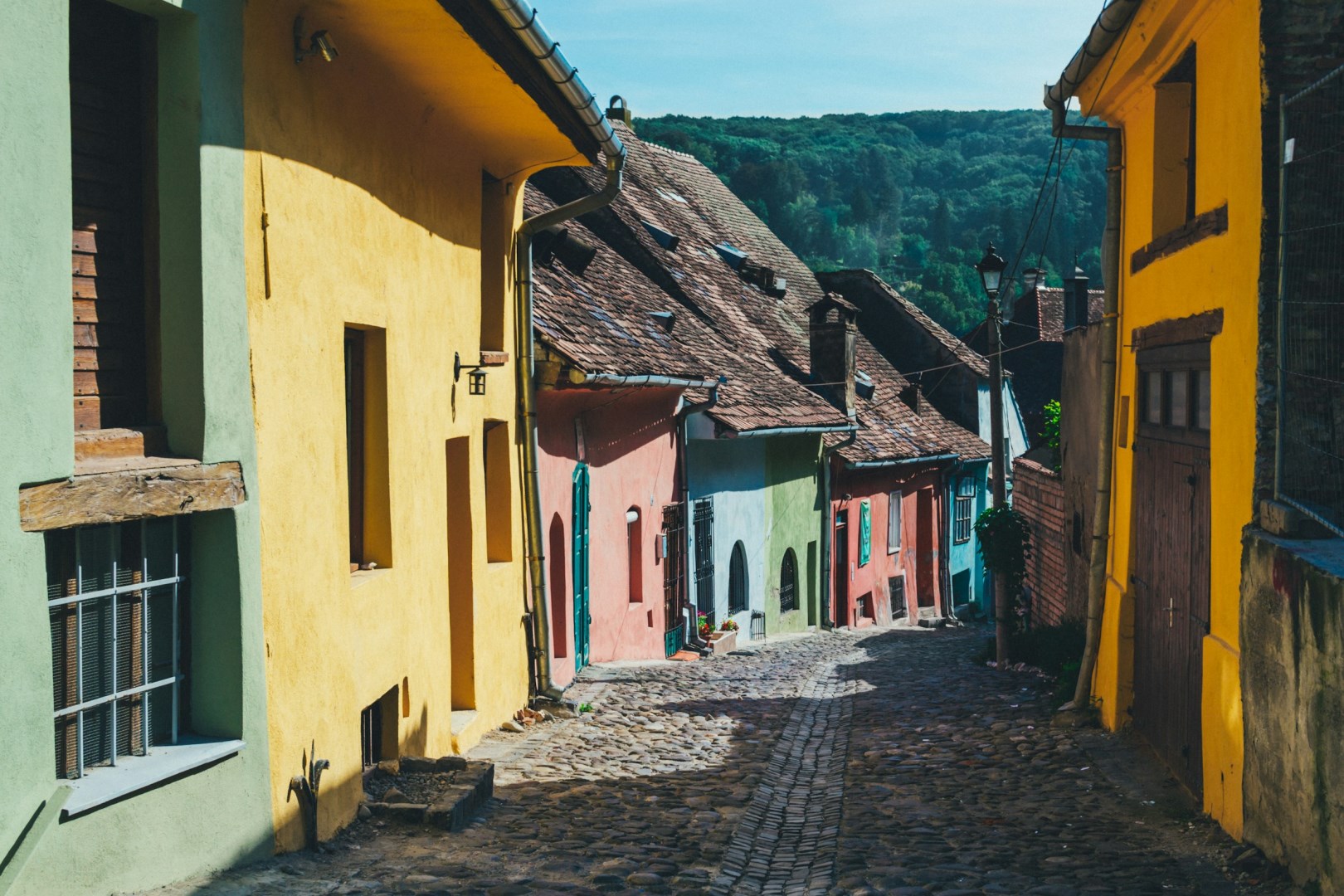

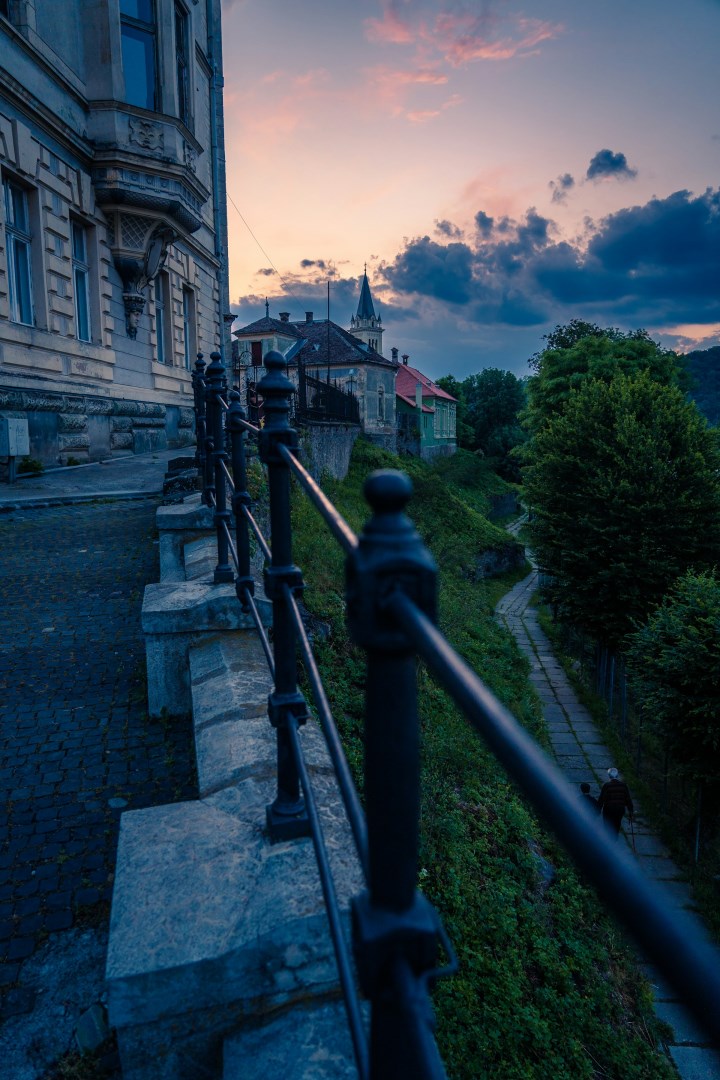

Sighisoara rises above the Târnava Mare River as one of the few medieval citadels in Europe that is still lived in and admired today. Its historic center has been on the UNESCO World Heritage List since 1999, recognized for its long history as a fortified Saxon settlement and its role in trade and defense on the edges of central Europe. Wander through cobbled alleys framed by pastel-colored houses, and the layers of time feel close at hand, from the city walls and guild towers that shaped daily life centuries ago to the busy cafés tucked beneath them.
At the heart of the citadel stands the Clock Tower, an iconic structure that once guarded the main gate and served as town hall. Built in the 14th century and rebuilt after the great fire of 1676, it now houses the local history museum and offers a panoramic view over Sighisoara’s rooftops from its observation balcony. Beneath its Baroque roof, carved figures once marked the hours and continue to signal the town’s long relationship with time and craftsmanship. Nearby, tourists will find Tailors’ Tower, Bootmakers’ Tower and other guild towers that once protected the walls and signaled the skills of the city’s medieval tradespeople.
Stories of the past live on in buildings like the Vlad Dracul House, a stone structure where Vlad II lived in the early 1400s and where his son, Vlad III, later known as Vlad the Impaler, was born. Today, this site blends history with local hospitality as a restaurant and small museum, giving travelers a memorable peek into the town’s connection to one of Transylvania’s most famous historical figures. Wander up the Covered Staircase and reach the Church on the Hill, a Gothic landmark with sweeping views over the citadel and beyond.
Other Popular Destinations in Romania

